Written by Nicola Richardson, Founder of The People Mentor.
The People Mentor helps small employers, managers and leaders handle difficult conversations, strengthen accountability and lead with calm, practical confidence.
This article explores what acting superior at work actually looks like, why managers avoid addressing it, and how to have a direct, professional conversation that changes the behaviour without damaging the relationship.
Key Takeaways from The People Mentor
- Acting superior at work is a behaviour, not a personality type. And behaviours can be addressed
- Most managers avoid this conversation because they are not sure how to frame it without it becoming personal
- The first step is separating the impact of the behaviour from your judgement of the person
- A well-prepared, private conversation is almost always more effective than hoping it resolves itself
- If the behaviour is affecting team morale or productivity, you have both the right and the responsibility to address it
Someone on your team acts like they know better than everyone else. They talk over colleagues in meetings. They dismiss ideas before they have heard them properly. They correct people in front of the room. They make newer team members feel small.
You have noticed it. Others have noticed it. And you have been putting off the conversation because you are not quite sure how to have it without it turning into a character assassination.
This post is for you. Here is how to manage someone who is acting superior at work. Practically, professionally, and without making things worse
What Acting Superior at Work Actually Looks Like
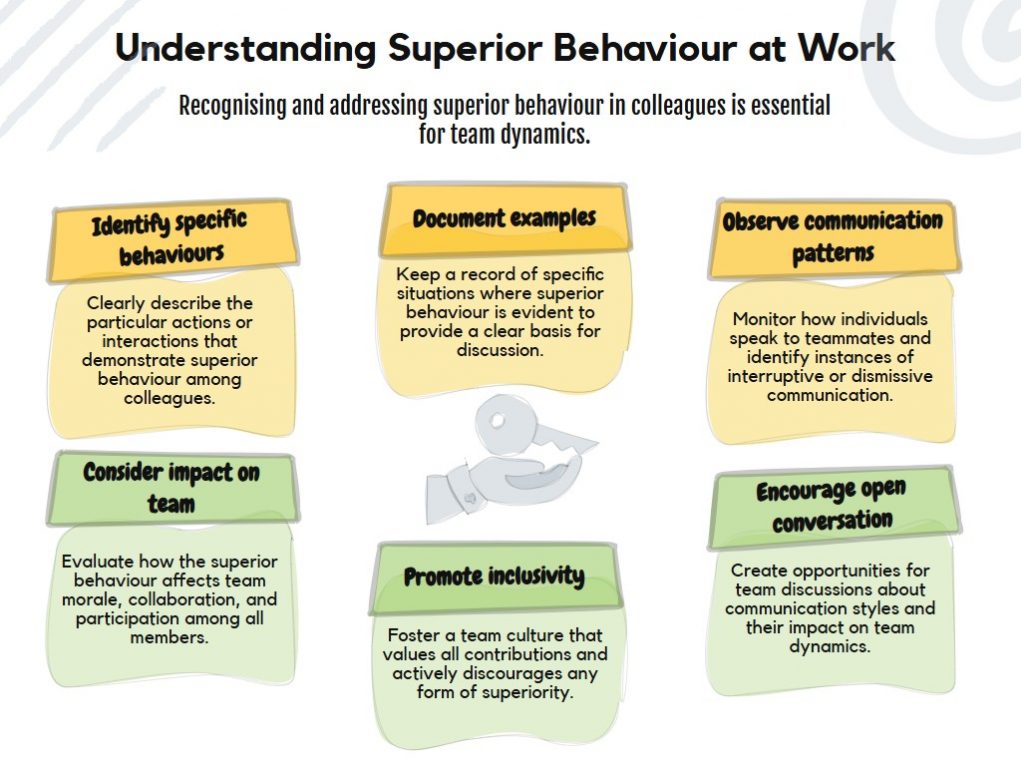
Before you can address the behaviour, you need to be able to describe it clearly. “Acts like they’re better than everyone” will not hold up in a conversation. Specific examples will.
Acting superior at work usually shows up in one or more of these ways:
| What you may notice | What it could mean | What to do next |
|---|---|---|
| Team member talks over colleagues in meetings | They may be seeking status or feel their contribution is undervalued | Name it privately and be specific about the impact |
| Ideas are dismissed before they are properly heard | They may not have been taught how to listen generously | Redirect in the moment, then follow up one to one |
| Public corrections that feel pointed | They may be unaware how it lands on others | Separate the behaviour from the intent in your conversation |
| Credit taken for team work | They may be anxious about their own visibility | Address the pattern, not the individual incident |
| Condescension towards less experienced colleagues | They may measure their own worth against others | ocus on the effect on team confidence, not on their attitude |
At The People Mentor, I always look for the pattern beneath the behaviour before drawing any conclusions about the person behind it.
Why This Superior Behaviour Happens
Understanding why someone acts superior at work does not mean excusing it. But it does help you approach the conversation with the right mindset.
In most cases, acting superior is a confidence mechanism. The person may feel uncertain about their place in the team, threatened by the capability of others, or anxious about not being seen as valuable enough. Their behaviour is a way of establishing status that feels safer than vulnerability.
Sometimes it is simply habit. If someone has worked in environments where this was the norm, or where being the loudest voice in the room was rewarded, they may not realise how their behaviour lands.
And occasionally, there is a skills gap. They may genuinely not know how to give feedback, disagree respectfully, or share credit in a way that feels natural.
None of this makes it your problem to fix on their behalf. But knowing what is likely driving the behaviour helps you frame the conversation in a way they can actually hear.
How to Prepare for the Conversation
Do not go into this conversation without preparation. This is one of the most common mistakes managers make. They raise something in the moment, without structure, and it becomes reactive and personal
Here is what to do before you sit down with them.
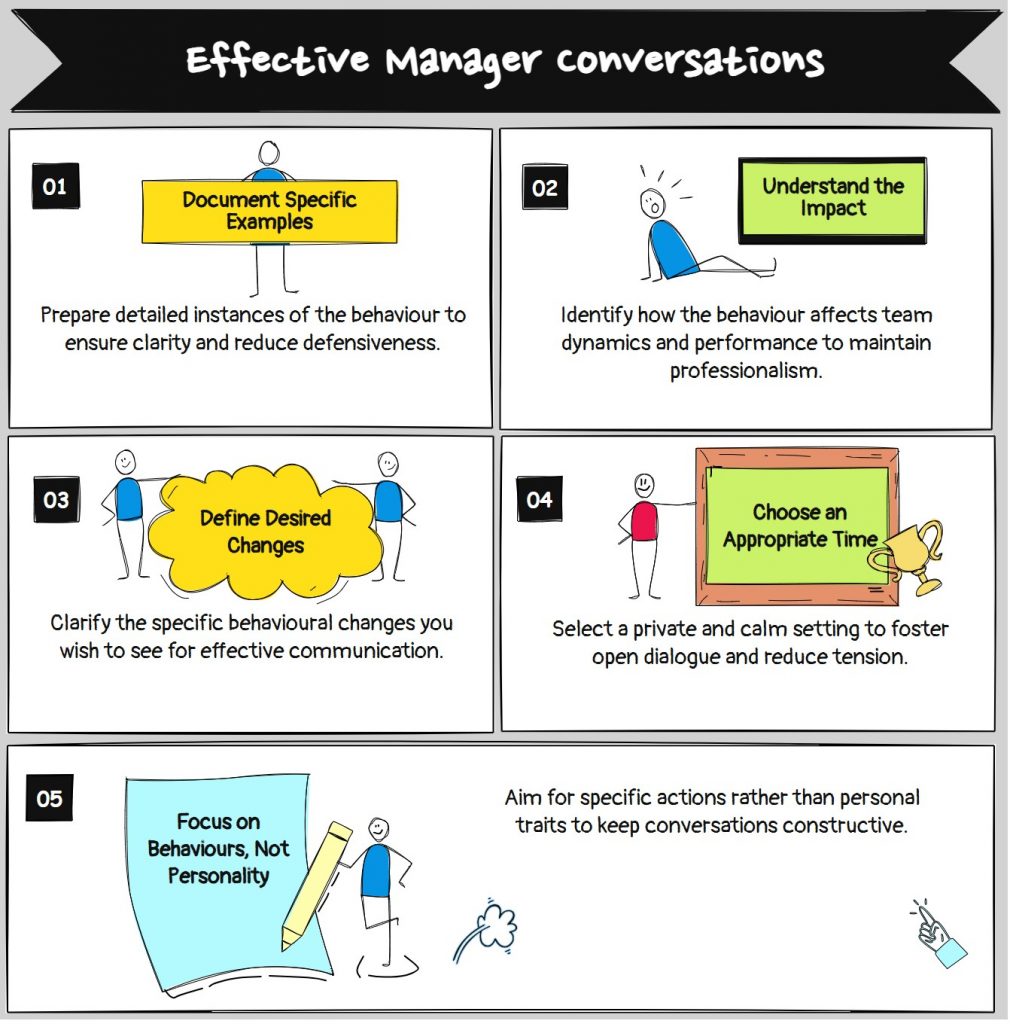
Write down three to five specific examples. Not “you always talk over people” but “in Tuesday’s team meeting, you interrupted Jo twice before she had finished her point.” Specifics are unchallengeable. Generalisations invite defensiveness.
Be clear on the impact. How is this behaviour affecting the team? Is it silencing certain colleagues? Is it slowing down decision-making? Is it affecting how clients perceive the team? The impact is what makes this a professional issue rather than a personal preference.
Decide what you want to change. You are not asking them to become a different person. You are asking for specific behavioural change. What does that look like? What would you need to see differently?
Choose the right time and place. Private, unrushed, and not immediately after an incident where emotions are high on either side.
How to Have the Conversation
Start by setting the tone. This is not a disciplinary meeting. It is a professional conversation between a manager and a team member about how their behaviour is landing.
You might open with something like:
“I want to talk to you about something I have noticed in team meetings recently. I want to share some specific observations and hear your perspective.”
Then share your examples. Stick to the facts of what happened, not your interpretation of why. “In the team meeting on Monday, you interrupted Sarah three times” not “you were dismissive and arrogant.”
Then name the impact. “When that happens, it closes down the conversation. Other people stop contributing because they’re not sure their ideas will be received well.”
Then give them space to respond. Listen properly. They may have context you were not aware of. They may be defensive initially. That is normal Give it a moment before you respond.
Then be clear about what needs to change. “Going forward, I need you to let colleagues finish before you respond, and if you disagree, to do it in a way that keeps the conversation open.”
Finally, agree a check-in. “Let’s revisit this in a few weeks and I’ll give you some feedback on how things are going.”
When the Behaviour Continues After You Have Spoken
Sometimes one conversation is not enough. If the behaviour continues after you have raised it clearly, the next steps are:
- A follow-up conversation that references the previous one and names that the pattern has continued
- A more formal record of the discussion, with agreed actions documented
- Involvement of HR if the behaviour is affecting team wellbeing significantly
The key is not to let it slide after the first conversation. Raising something and then not following up signals that it was not serious. It was. Treat it that way.
For further guidance on managing workplace behaviour, visit ACAS
Frequently Asked Questions
What if the person acting superior is a high performer?
This is the situation many managers find most difficult. The person delivers results, so the behaviour gets tolerated. But high performance does not excuse behaviour that damages team morale. The two things are separate. A high performer who acts superior at work is still costing you. In retention, in team confidence, and in the contributions you are not getting from the colleagues they are silencing
What if they get defensive and deny it?
Stay calm and stay specific. “I understand this might not feel accurate from your perspective. What I can speak to is what I observed. In that meeting, these things happened.” You do not need them to agree with your interpretation. You need them to understand what you saw and what needs to change.
What if I’m not sure whether it’s acting superior or just a direct communication style?
Ask yourself this: does the behaviour make others feel less capable, less heard, or less willing to contribute? If yes, the impact is the same regardless of intent. And impact is what you manage.
If you are dealing with a situation like this and want support preparing for the conversation, Making Difficult Conversations Easier gives you the frameworks, language and practice you need to handle it well. Find out more about Making Difficult Conversations Easier.