
This episode comes from Nicola Richardson, who founded The People Mentor to help small employers, managers and leaders handle difficult conversations, strengthen accountability, and lead with calm, practical confidence.
You’ve made the point in the meeting. Nobody reacts. Ten minutes later, someone else says almost exactly the same thing, and suddenly everyone’s nodding. In this solo episode I want to talk about influence without authority, why a job title isn’t what makes people actually listen to you, and what genuinely builds influence with peers when you have no formal power over them at all.
Listen to the full episode on Spotify below. ⬇️
Key takeaways from The People Mentor
• Authority means someone has to do what you say. Influence means someone wants to. You can build real influence long before you have a title.
• Waiting for permission to speak up has a cost. Someone else eventually says the same thing and gets the credit.
• Expert power, being genuinely good at something and letting people see it, is available to you no matter where you sit on an org chart.
• Understanding what actually drives someone, not just their job title, is what makes influence land.
• Rapport that only shows up when you need something gets noticed, and it costs you more than staying quiet would have.
• Most failed attempts at influence aren’t failures of charm. They’re failures of listening.
In This Episode, I Talk About
- Why influence and authority are not the same thing, and what waiting for a title actually costs you
- My own experience early in the Civil Service, and how expert power became my way in when nobody else believed in me
- The difference between rational persuasion and apprising, and when each one actually works
- Why collaboration and consultation matter even more with peers than with anyone else
- What real rapport looks like, and why people can always tell the difference
- A senior leader who helped me unprompted, and what that taught me about the return on reliability
- One practical step to build more influence with a single colleague this week
A Useful Reframe
Most failed attempts at influence aren’t failures of charm. They’re failures of listening.
Episode Transcript
You’ve made the point in the meeting. Nobody reacts. Ten minutes later, someone else says almost exactly the same thing, and suddenly everyone’s nodding.
Does this sound like something you’ve experienced?
I’m Nicola from The People Mentor.
If you’ve ever felt like you’re saying the right thing but nobody’s actually listening, this one’s for you.
Here’s the thing most people get wrong about influence. They think it needs a title behind it. They think if they were the manager, people would automatically listen. So they wait. They wait for the promotion, the badge, the bit of paper that gives them permission to speak up. And in the meantime, they stay quiet, or they say things so softly that nobody notices.
How Influence affects motivation
I want to be really clear about something. Influence and authority are not the same thing. Authority means someone has to do what you say. Influence means someone wants to. And you can build real influence with your colleagues, your peers, the people alongside you, long before you ever have a job title that says you’re in charge.
What waiting costs you
Here’s what waiting actually costs you. Every time you swallow a good idea because you assume it’s not your place to say it, someone else says it later and gets the credit for it. Every time you go along with a decision you privately think is wrong because you don’t feel you’ve earned the right to push back, you teach the people around you that your agreement doesn’t mean much, because you agree with everything. Over time, that quietness becomes a habit, and it’s much harder to break than it would have been to speak up in the first place.
Let me tell you why this matters so much with peers specifically. When you’re influencing someone who reports to you, there’s a structure in place. You’ve got some positional weight, even if you don’t use it. But with a peer, there’s none of that. You might even be quietly competing for the same opportunities, the same recognition, the same next step. So if you want them on side, you can’t lean on a title that doesn’t exist. You have to earn it a different way.
How I learned this the hard way
I learned this the hard way, early in my career.
I joined the Civil Service in 1987. A while later, my personal life fell apart. I was going through a divorce, and I was struggling. My managers had more or less written me off. One of them actually told me they doubted I’d succeed in a new role I’d been given, because they didn’t think I had the ability to concentrate.
Here’s what they didn’t know. I had a real gift for going into detail, for sitting with a complicated case and finding exactly where the problem was. The role was resolving people’s debts, and it turned out that patience for detail was exactly what the job needed. In a fairly short time, our office had the best success rate in the whole region.
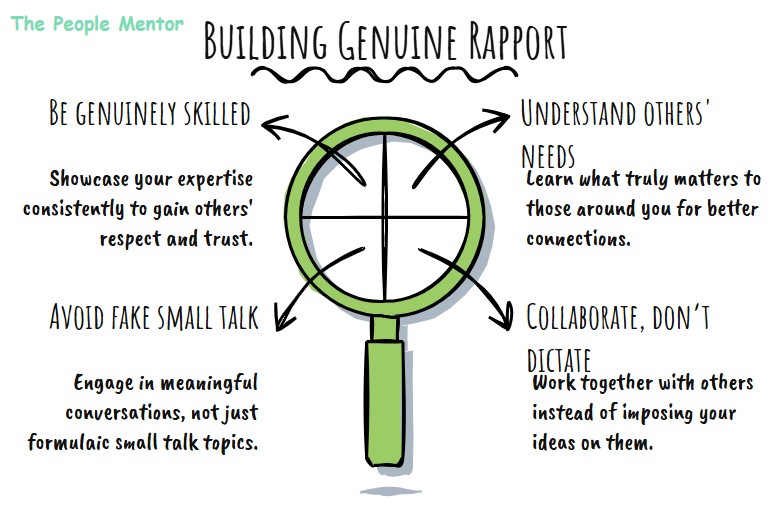
Nobody gave me that. I didn’t get promoted first and then start proving myself. I proved myself with the work in front of me, and the recognition followed. That’s expert power, and it’s one of the few forms of influence that’s completely available to you no matter where you sit on an org chart. It’s built from doing the thing you’re good at, consistently, in front of the people who need to notice.
How Expert Power works
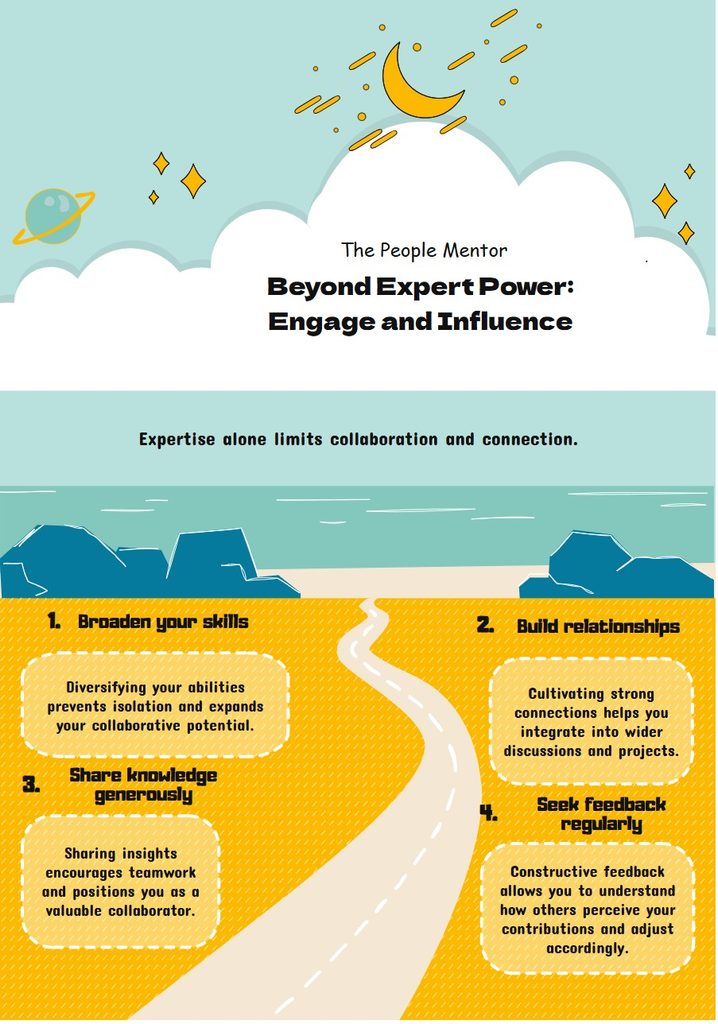
But expert power on its own isn’t enough. If all you’ve got is your competence, you can end up isolated, seen as useful for one narrow thing rather than someone people actually want to work alongside. I’ve watched this happen to genuinely brilliant people. They get so good at their specific slice of the job that colleagues stop seeing them as part of the wider conversation, and just start routing the one type of problem their way. That’s not influence; that’s being a tool in a drawer. You get picked up when needed and put back down afterwards.
So expert power has to be paired with something else, and that’s the part most people skip.
You have to actually know the people you’re trying to influence.
Not just their job title. What drives them. What they’re responsible for. What they’re quietly hoping to move toward next, whether that’s a promotion, a bit more autonomy, or just being allowed to do the parts of the job they enjoy. Two colleagues can look almost identical on paper and be motivated by completely different things. One wants to collaborate, to feel part of something bigger than themselves. The other wants things done properly and quickly, and doesn’t want to sit around discussing feelings about it. If you talk to both of them the same way, you’ll land with one and completely miss the other.
What is rational persuasion
This is where rational persuasion comes in, and what’s sometimes called apprising.
Rational persuasion is the simple one. You use facts, clear reasoning, and a solid case to bring someone round to your view. It works best when the other person already shares your bigger goal. You’re just showing them the best route to get there.
Apprising is a little different. It’s when you show someone how supporting your idea benefits them personally, not just the project.
For example, say you need a colleague’s help on something they’re not thrilled about. And you know they’re hoping for more visibility with senior leadership. If this piece of work is genuinely going to the board, you can tell them that. You’re not manipulating them; you’re being honest about a real benefit that lines up with what they want.
That’s influence built on actually understanding someone, not just pushing your own agenda.
Then there’s collaboration and consultation, which I’d argue matter even more with peers than with anyone else. When you ask someone to help you shape an idea rather than just handing them a finished plan and asking for their buy-in, something shifts. It stops being your project that they’re being asked to support. It becomes something they helped build. People defend the things they had a hand in.
I saw this play out clearly when I was also the office union representative. That role taught me more about influence than almost anything else in my career, because I had no formal power at all in that context. What I had was the ability to listen properly, to find the middle ground between two positions that looked completely stuck, and to help people feel heard even when I couldn’t fix their situation outright. Often, people didn’t need me to solve anything. They needed someone to actually listen, and then point them toward whoever could help. That’s influence built entirely on trust, not on rank.
What Influence Depends on
So here’s what I want you to notice about all of this. None of it depended on me having authority over anyone. It depended on three things. Being genuinely good at something and letting people see it. Understanding what actually matters to the people around me. And being willing to build things with people rather than at them.
One more piece is worth naming, because it trips people up. Rapport. Real rapport, not the performed kind. If you’re not interested in football, don’t ask someone about football just because you read somewhere that small talk builds relationships. Find the thing that’s actually true for both of you. Sometimes that’s a shared frustration about a process that isn’t working. Sometimes it’s genuinely asking someone what they’ve got coming up that they’re looking forward to, and then asking a proper follow-up question instead of moving straight on to your own agenda.
People can tell the difference between someone building a relationship and someone running through a checklist. If you compliment someone’s work only when you want something from them, they’ll clock it eventually, and it’ll cost you more than the silence would have. The whole point of rapport is that it exists whether or not you need anything this week.
How Building Rapport and Influence Helps
I think about this every time I remember a senior leader I worked alongside years ago. She wasn’t my manager. She had no reason to invest in me at all. But she knew that if she needed something done, and needed it done quickly, I’d get on with it without a fuss. I was flexible, I adapted to whatever she needed, and I didn’t make a drama out of last-minute requests.
When I went for a promotion, she came to me. I hadn’t asked her to. She helped me rework my CV, and she sat with me while I practised for the interview, going over questions again and again until I could answer them properly. At the time, she’d been in a car accident and wasn’t well at all. She could easily have said no, and nobody would have blamed her for it. But she insisted. She wanted to support me.
That’s the return on rapport and reliability that you can’t plan for and can’t force. I hadn’t built that relationship so she’d help me one day. I’d built it because that’s just how I worked. The help she gave me came entirely unprompted, at a point when she had every reason to say she couldn’t.
So what can you actually do with influencing, starting this week?
Pick one colleague you’d like more influence with. Not your whole team, not everyone at once. One person. Spend some time this week genuinely finding out what they’re working toward, not what they’re doing, but what they actually want out of it. Then, next time you need their support on something, frame it in terms of that. Not “I need you to do this for me,” but “this would also get you in front of the people who make decisions about X,” if that’s true, or “I know you’ve been wanting more of a say in how we approach this, so I’d genuinely like your input before I take it further.“
Watch what happens. It won’t be instant. Trust and influence build slowly, in layers, not in one clever conversation. But you’ll start to notice people bringing you into things earlier, rather than after the decision’s already made. You’ll notice them checking their view against yours before a meeting, rather than only after.
And if it doesn’t land the first time, don’t scrap the whole approach. Ask yourself honestly whether you actually took the time to understand what mattered to them, or whether you assumed you already knew. Most failed attempts at influence aren’t failures of charm. They’re failures of listening.
Frequently Asked Questions
What’s the difference between influence and authority at work? Authority means someone has to do what you say. Influence means someone wants to. You can build genuine influence with peers and colleagues long before you have any formal authority over them at all.
How do you build influence with a peer who doesn’t report to you? Start with expert power, being genuinely good at something and letting people see it consistently. Then pair that with actually understanding what drives them personally, not just their job title.
What’s the difference between rational persuasion and apprising? Rational persuasion uses facts and reasoning to bring someone round to a shared goal. Apprising shows someone how supporting your idea benefits them personally, which works especially well when that benefit is genuine, not manufactured.
Why does rapport matter so much for influence, and how do you build it genuinely? People can tell the difference between real rapport and a performed checklist. Genuine rapport comes from finding what’s actually true for both of you and showing up consistently, whether or not you need anything that week.
A Final Thought
None of the influence Nicola describes here depended on having authority over anyone. It came down to three things: being genuinely good at something and letting people see it, understanding what actually matters to the people around you, and being willing to build things with people rather than at them.
If you want to build on this properly, The Manager’s Academy is where I help people work through exactly this kind of thing, month by month, whether you manage anyone yet or not. Take a look at The Manager’s Academy and see if it’s the steadying hand you’ve been after.
This is The People Mentor, signing off. See you next time.